
- PagerDuty /
- Blog /
- Digital Operations /
- Automated Remediation for Successful Digital Operations Management
Blog
Automated Remediation for Successful Digital Operations Management
by Steve Barrett
April 14, 2021
| 4 min read
This article was previously published by Raconteur.
“Companies forced to go digital overnight create huge challenges for IT,” shared Steve Barrett, Vice President of Sales, EMEA, at PagerDuty.
A global study by PagerDuty revealed that 80% of organizations have seen the pressure on their digital services grow significantly, which includes a 47% jump in the number of daily incidents that they face.
Additionally, just under two thirds of all IT and DevOps professionals are now spending an extra ten or more hours a week—compared with six months ago—trying to tackle these incidents, and two out of five businesses only expect things to get worse in the year ahead.
Unsurprisingly then, a massive four out of five tech experts believe digital acceleration must be top of their company’s priority list during 2021—if they are to optimise their operations. A key consideration is that, if mobile applications and websites start to slow or falter at a time when digital is often the only means possible to interact with the brand, the impact on the customer experience will inevitably be severe.
Another important priority in the middle of a global downturn is finding ways to cut costs without damaging the quality of service. So what can organizations do to optimize their digital operations?
It is vital to ensure team members have the right skills, processes, and information in place to take full ownership of the services for which they are responsible. In other words, if an incident takes place, it is imperative they are on it immediately, not only to resolve the situation, but also to keep stakeholders in the loop until they are able to do so.
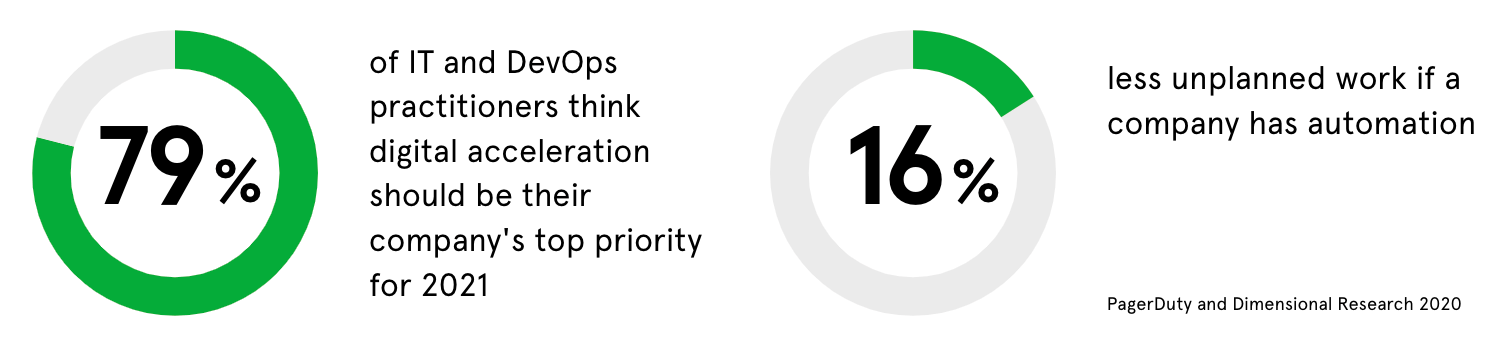
The biggest challenge in this context is handling unplanned downtime in real time. While a traditional centralized approach can take hours or even days to deal with such a situation, being able to react in seconds, understand the impact and take appropriate action in the right context can make a vast difference in terms of brand reputation and overall cost efficiency.
But as companies increasingly migrate their digital services to the cloud to remove operational bottlenecks and provide much needed agility, they can find that the large numbers of automated signals and alerts generated in a highly-digitalized environment put their employees and processes under growing strain.
This means systems are required to help tech teams manage it all and make sense of the noise. In fact, our survey shows that a huge 69% of respondents believe smart integration will be critical in helping them do their job more effectively.
Just under two-thirds point to automation and the removal of manual processes as being critical to enable them to do more with less. A further 51% believe intelligent data and insights will prove vital in helping them prioritise where to spend their time.
Ensuring Pieces of the Puzzle Are in Place
But getting all the pieces of this jigsaw puzzle in place takes time and effort. As a result, based on our work with customers over the last 11 years, we have devised a four-stage model that businesses typically go through before they hit full operational maturity.
The first of these stages is reactive. This means the knowledge and capabilities of digital teams are generally siloed, many processes are manual and issues tend to be resolved by inefficient processes, like asking a large group of people to join a conference call.
The second step is responsive. Here monitoring tools have been introduced to alert staff to any problems, but an ad hoc approach to information-sharing means they take longer to solve them than they should.
The third phase is proactive. Many processes and activities are automated at this point and monitoring teams have access to timely information. Therefore, they know when to intervene to make appropriate decisions.
The final level is preventative. Here, machine-learning tools enable predictive remediation to take place to avert or resolve incidents before they cause trouble. Processes are highly automated and a cycle of continuous learning occurs, in turn enabling a cycle of continuous improvement.
To work their way effectively through these four stages, a good starting point for most organizations is to understand where they are today, which includes recognizing the maturity of their people and processes. In reality, most are at the beginning of their journey and starting to move from reactive to responsive mode.
Interest in ways to optimize digital operations more swiftly has leapt since the realities of the coronavirus pandemic struck, which means change is starting to evolve at pace. Put another way, automated remediation is increasingly becoming a necessity rather than a “nice to have” for savvy organizations who may be juggling cost efficiencies, but are also keen to offer their employees an appropriate work-life balance.