Employee Success Stories
CIO Major Incident Response teams use Status Pages for communications and Incident Workflows to automate incident response steps
Learn how one team saved 68 hours per year and improved customer satisfaction by automating stakeholder communications and incident response tasks through Status Pages and workflows.
- PagerDuty /
- Ops Guides /
- Using PD /
- CIO Major Incident Team
The Challenge
How They Were Working
The CIO Major Incident Response team manually managed stakeholder communications during incidents. Responders spent significant time fielding individual DM requests for updates, providing inconsistent information, and handling administrative tasks instead of focusing on incident resolution.
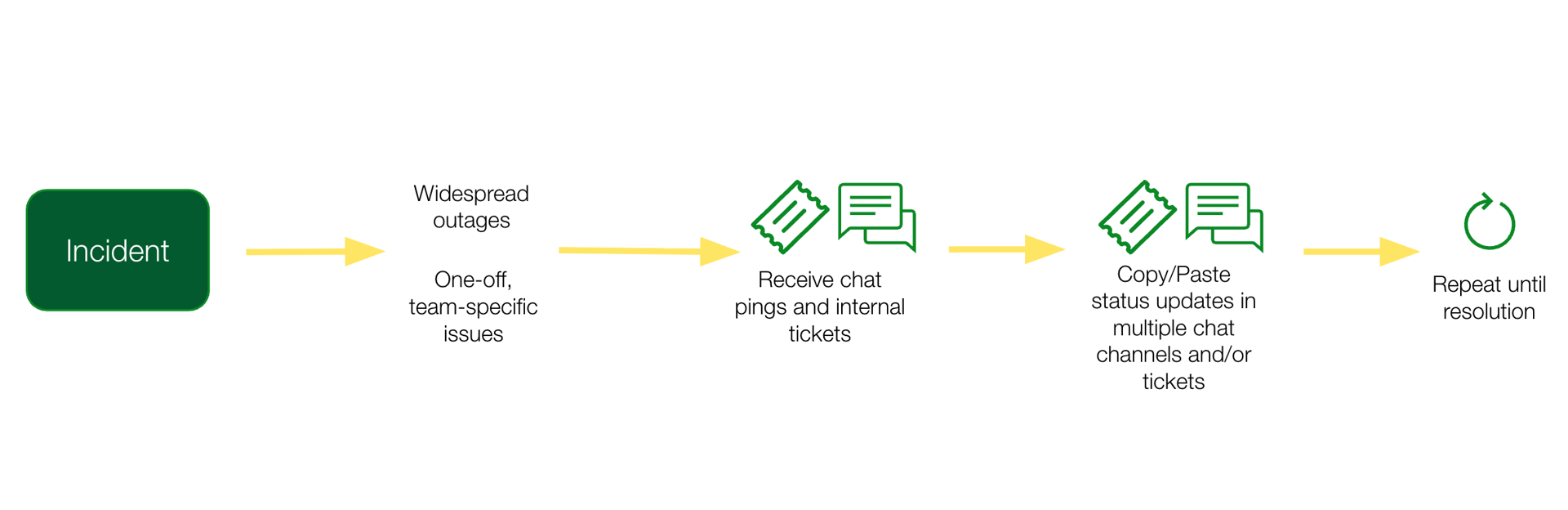
Pain Points
Productivity Loss
Users attempting to use tools that are having an outage and spending time re-trying and to communicate with help desk.
CIO Time Lost
Time spent responding to DMs from users and reporting status back individually.
Inconsistent Updates
Status reported on an untimely schedule and with varying information disseminated depending on the responder and the user requesting an update.
Key Challenge
Sending stakeholder communications in a consistent and centralized way without having to navigate across multiple chat channels and tickets.
The Solution
What They Did
Mapped and subscribed stakeholders to services
Created an incident workflow to handle Incident Response admin tasks
Educate Incident Management team on PD Advance usage for status responses
The Results
How They Are Now Working
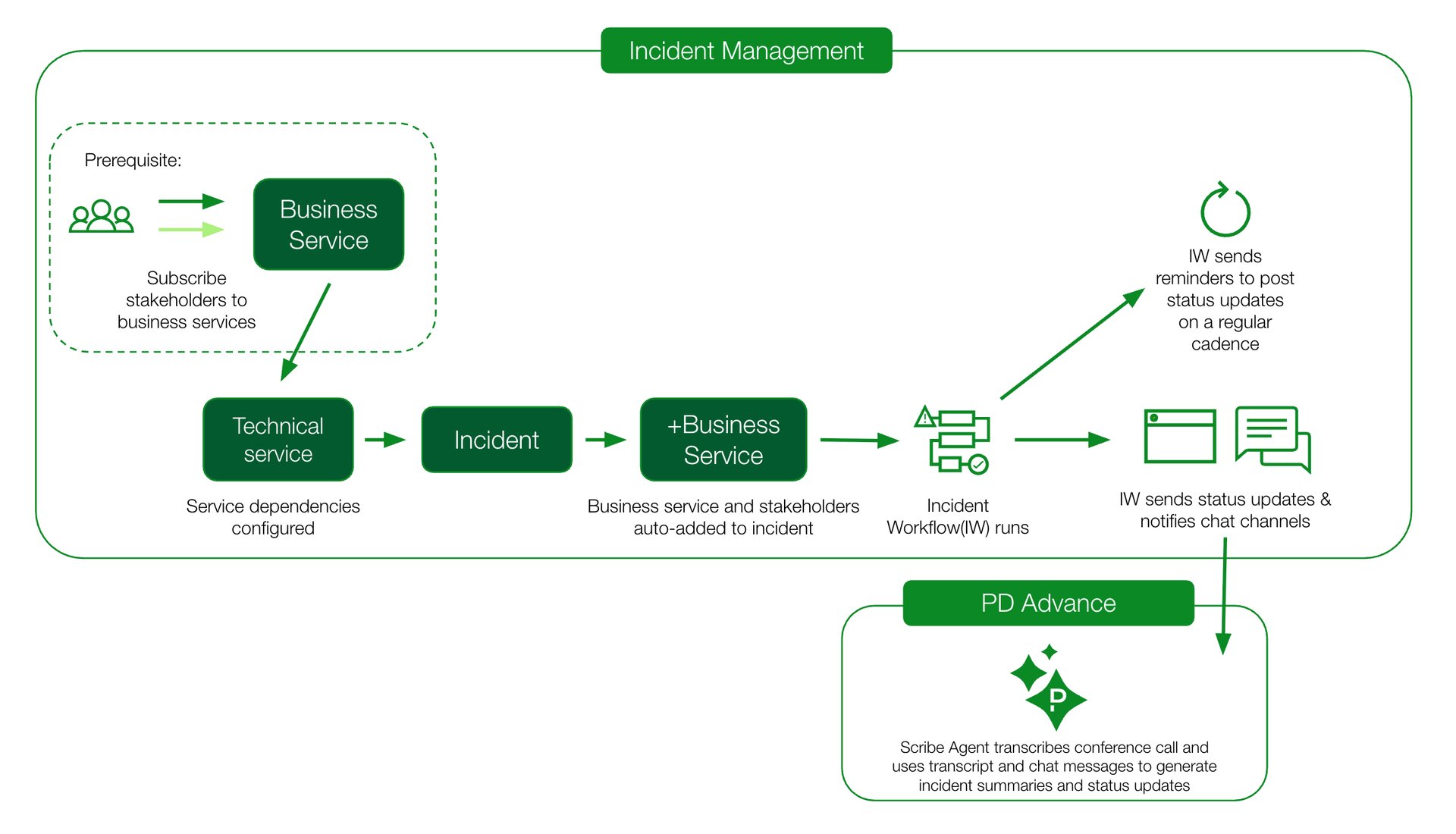
Wins
Productivity Gains
Customers are informed of outages before they have to discover themselves thus gaining productivity hours.
Consistency
Consistent updates and schedule for notifying end users.
Customer Satisfaction
Customers receive accurate information in a timely manner.
Outcomes
Time Saved
68 hours per year saved in managing, discovery, and reporting on and about major incidents.
Improved customer satisfaction
Customers receive accurate information in a timely manner through automated status updates.
Reduced response burden
Eliminated manual status reporting and individual DM responses to stakeholders.
Faster incident resolution
Team can focus on resolving incidents rather than administrative and communication tasks.
Lessons Learned & Tips
- Invest time in properly mapping stakeholders to appropriate services for effective communication
- Plan change management strategy when introducing AI-assisted features like draft updates to gain team adoption
Ready to streamline your major incident response?
Start your free trial today and see the difference.
Start Free Trial